
How do you choose a life coach?
When you are making the decision to invest in yourself, it is really important to know that you are making the best choice possible.
If you are anything like me, you can get lost in a tangle of indecision whilst investigating all your options and not be 100% sure what you should be looking. That’s why I thought I would put together a brief guide with some things consider when you are looking for a life coach:
Training & Qualifications
At the moment life coaching is unregulated, which means that you don’t have to be qualified to call yourself a coach or offer coaching. It also means there are no regulations regarding the type of qualification someone may have, and the courses can vary considerably, from an online course with no assessment to a longer-term study period with detailed assessments.
Are they a member of a professional body?
(e.g. Association for Coaching or UK International Coach Federation) To be a member of a professional body means that the coach will have met set requirements with regards to their training and experience. There will be an application process which considers both experience and qualifications, and whether the individual has an appropriate mix of the two. They will also be committed to working within a code of conduct and ethics.
Experience
It is important to recognise that everyone needs to start from somewhere, however it is worth considering this when choosing a coach. Some qualifications will require a minimum number of hours of coaching practice to be completed and signed off, before awarding a qualification. A lot of coaches are able to share feedback or testimonials from previous clients as a way of sharing what the coaching experience with them is like.
Insurance
As with other professional services, it is good practice as a coach to have an appropriate level of insurance. They may have this listed on their website, or you can ask to see their insurance certificate etc.
Approach & Style
As with everything, different coaches will coach in different ways. Therefore it is really important to do some investigating. You will often be able to get a sense from their websites / profiles on any directories etc along with any blogs or articles they may have written.
Coaching is often used interchangeably along with mentoring and support, as a way to describe the type of support that people are offering. Coaching is different from mentoring. Coaching is not about telling you what to do. Coaching is a collaborative conversation, that allows you the coachee / client time and space to think clearly and discover your solutions and way forward with the coaches support.
Another misconception can be that coaching is counselling. It uses some similar skill sets, but both serve very different purposes for the recipient. If you are not sure which would best suit your needs right now, discuss this with potential coaches and counsellors.
There are a number of core principles of life coaching that you should expect from any life coach:
- Respect
- Acceptance
- Confidentiality
- Active Listening
- Future focus
- Non-directive
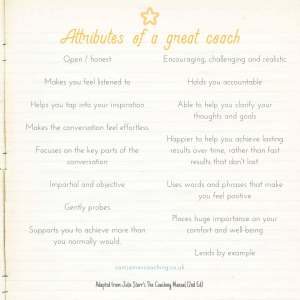
Rapport
This one is vital for the success of your coaching experience. You need to feel comfortable and able to talk openly and honestly with your coach. Give them a call if you fancy a chat before committing to anything. If it doesn’t feel right, it is OK to say you aren’t a good fit.
Are they listed on a validated directory?
This can be a really useful way to seek some reassurance with regards to the validity and quality of the coach you are considering. Some (but not all) will have requirements that individuals need to meet to enable them to be listed (for example, qualifications or membership of a professional body, and valid insurance). Life Coach Directory is a great resource for searching potential coaches and different approaches, as well as interesting articles.
Good luck searching and get in touch if you’d like any further guidance.

